Jump Force characters: roster basics, combat roles, and design choices
A developer-focused look at Jump Force characters: how the crossover roster is built, combat roles, and what the design choices mean for players.
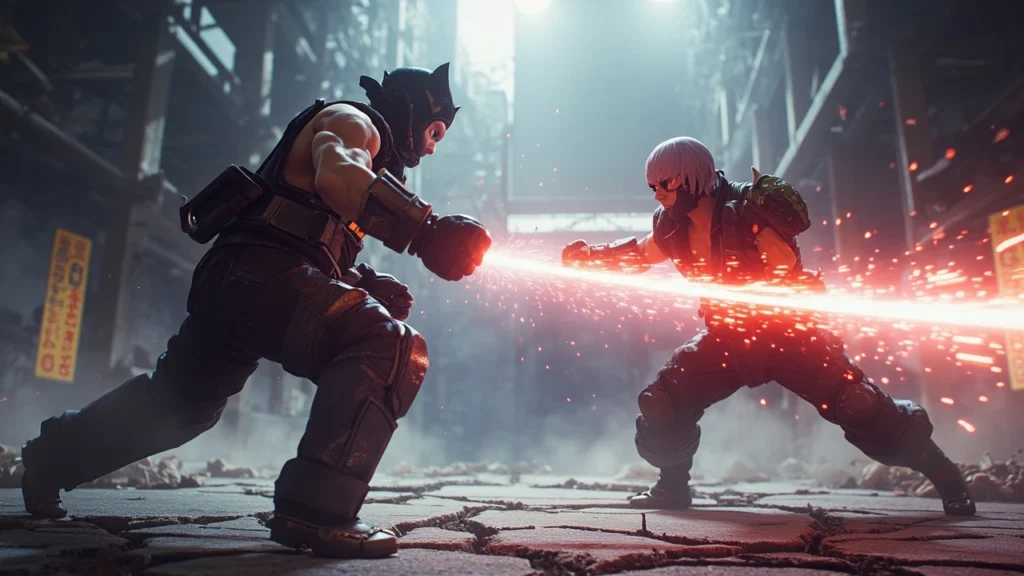
Jump Force characters: how the crossover roster is built
Bandai Namco’s Jump Force placed manga icons from Dragon Ball, One Piece, Naruto and a long list of weekly Shōnen Jump titles into a single 3v3 arena fighter. For a developer or technical artist studying the game, the more useful question is not who is in the roster but how the Jump Force characters were selected, how they were translated into one shared combat model, and what the design trade-offs reveal about the limits of crossover projects. The roster is also a useful case study for any team building a multi-IP fighting game, because it shows the difference between licensing a brand and rebuilding its protagonist as a playable asset.
That mix of brand recognition, shared mechanics, and uneven fidelity is the reason a developer-focused look at Jump Force characters is more useful than a player tier list. The roster tells a story about how licensing, animation cost, and game balance collide when famous characters share one physics grid, one gauge economy, and one frame of animation timing.
Roster sources and selection logic
Jump Force’s launch roster drew from the long history of Weekly Shōnen Jump, the manga magazine that has shaped anime fandom since the late 1960s. A 2019 Bandai Namco release tied the game to the magazine’s 50th anniversary, which is the main reason most of the Jump Force characters come from long-running series rather than newer or shorter works. The magazine’s editorial calendar influenced which characters were plausible to license in time for the anniversary window, and the team’s licensing leads used that calendar as a soft deadline for the roster.
Selection still required a defense. Each character had to clear three gates before the team committed to production:
- Brand value: the character had to be recognizable to a global audience that was not necessarily reading weekly manga.
- Combat viability: the character needed a clear, transferable fighting style that could be rebuilt in 3D without copying a different Jump Force character already in the roster.
- Legal fit: the deal had to clear the publisher, the original manga publisher, and any animation studio that held derivative rights at the time.
That third gate is the one most players never see, and it is the reason some long-requested characters stayed out of the base game and arrived later as paid DLC, while other, less obvious picks made it into the launch roster because the rights were simply easier to clear. In a few cases the team chose a familiar name over a more obscure one because the rights holder was already a known partner of the publisher, which cut weeks of negotiation out of the schedule.
The team also weighed franchise shelf life when ranking candidates. A series that was about to relaunch with a new anime season, a new film, or a new game tied to the same brand was treated as a stronger pick, because the marketing team could ride that wave in parallel. A character from a series in a quiet period between adaptations had to justify itself on combat identity alone, which is why several of the more unusual picks in the launch roster are characters whose source material had a sudden burst of attention just before the game’s production window opened.
How the roster is grouped in the game
Inside the game, Jump Force characters are split into named series, which act as cosmetic and lore buckets more than mechanical classes. A team of three can mix any three series, but the menu presents the cast in groups so players can see which universe each fighter comes from. The grouping is also a hint about how the art team scheduled their workload, because characters in the same group often share reference material, art directors, and sometimes even rig templates. When the production lead needed to cut a feature mid-cycle, the grouping made it easier to decide which character’s unique slots were safe to drop and which had to be protected.
| Group | Representative Jump Force characters | Typical combat identity |
|---|---|---|
| Dragon Ball | Goku, Vegeta, Frieza, Trunks | Ranged ki blasts, flight, transformation gauges |
| Naruto | Naruto, Sasuke, Boruto | Hand seals, substitution jutsu, area-of-effect jutsu |
| One Piece | Luffy, Zoro, Blackbeard | Stretching limbs, weapon swings, haki bursts |
| Other classic Shōnen Jump | Ichigo (Bleach), Yusuke (Yu Yu Hakusho), Gon (Hunter × Hunter) | Spirit energy swords, spirit gun, Nen abilities |
| Villains and late additions | Frieza, Dio, Hisoka, Ryuk | Counter-heavy, trap-based, or long-range poke tools |
For a developer, the value of this grouping is that it shows how the design team treated the roster as a coverage problem, not just a fan-service list. They needed a hitbox archetype, a move archetype, and a personality archetype for each new character, and the series groupings gave them a natural checklist. When a designer pitched a new character, the first question was usually which of the four combat roles the character would fill, and which existing roster slot it would replace if the schedule tightened.
The grouping also fed the QA matrix. Each series group had a senior tester assigned to it, partly because the testers needed to learn the source material to judge whether a move read as faithful to the character, and partly because reference footage for one series rarely overlapped with another. A tester who knew the original Hunter × Hunter fights could spot a Nen animation that felt off in a way a generic playtest would have missed, which is why the QA leads asked for series specialists during the launch window.
Combat roles and how each character earns a slot
Every playable fighting game has to answer a quiet design question: what does this character do that no other character already does? Jump Force characters are not all built on the same hitbox system or the same gauge rules, so the combat roles are unusually visible. The game uses an awakening gauge, a block button, and a target-switching system for 3v3 play, and each character has to find a niche inside that shared skeleton.
The combat roles below are the recurring patterns across the roster. They are useful when you are trying to understand why two characters with similar power levels in the source material can feel completely different once they are in the game. A character who is a clear rushdown in the anime, for example, can be tuned as a mid-range zoner if the team needs to fill that slot, and the source material is then adjusted in VFX, voice, and cinematics to match the new role.
- Rushdown fighters: built around pressure, fast normals, and short combos. Luffy and Goku are good examples, with quick advancing options and easy confirm tools.
- Zoner fighters: built around controlling space with long-range specials. Frieza and Blackbeard fit here, with projectiles that lock down a large portion of the stage.
- Grapplers and command-grab fighters: built around throws, command grabs, and mix-ups once a hit lands. Characters like Dio fit this niche by leaning on his time-stop stand.
- Support hybrids: characters whose kits include healing, Awakening boosts, or stage control. Naruto and Yusuke tend to play this way, with tools that reward reading the opponent’s Awakening timing.
A useful exercise is to pick a character, list their normals, then classify each normal as poke, anti-air, frame trap, or mix-up. You will quickly see which of the four roles above they are tuned toward, and which of those roles is under-filled in the current roster. That gap is often where a future DLC character would have been placed, and it is also where a balance patch will quietly buff or nerf existing moves when the meta settles.
Role coverage is also where the shared-skeleton cost shows up. A grappler needs custom hit reactions on hit, custom throw animations, and a unique command-grab window, all of which sit outside the shared library. A zoner is much cheaper, because projectiles and ranged specials are the easiest thing to attach to a base rig. The art and animation leads kept a running cost sheet per character, and a fighter was rarely added to the schedule unless the projected workload fit inside the remaining budget.
Shared skeleton, unique silhouettes
Visually, Jump Force characters have to read as their original designs within the first half-second of being selected. The team solved this by keeping a shared combat rig and an economy of silhouette traits: hair, hat, weapon, posture, and palette. Each character gets a unique idle, win pose, and a signature cinematic for their Awakening state, but the bones underneath are mostly the same.
This is a standard pipeline decision for any crossover fighter with a large roster. The cost of a fully unique rig per character rarely pays for itself, especially when the release schedule includes ongoing DLC. The compromise is to invest in a small set of unique anim slots per character, then reuse the rest from the shared library. The roster’s visual quality then depends on how well the art director protected those unique slots from being quietly cut by the schedule. In practice, a handful of signature moves carried the visual identity, and the rest of the kit reused shared blocks with a small amount of hand-keyed cleanup.
Silhouette work has a hidden cost in QA. Because the rig is shared, two characters with similar body proportions can blur into each other on a small screen or a busy stage. The team dealt with this by giving every character a unique idle and a unique idle weapon, then by reserving the most distinct silhouette features for the characters who needed them most. A character whose source design is a tall figure in plain clothes got more attention to hair and posture, while a character with a built-in signature weapon got the weapon slot as the silhouette anchor.
Awakening system and how it changes the roster
Every Jump Force character can enter an Awakening state, which is a temporary powered-up form that usually ties to their source material. Awakening changes damage, gives access to a cinematic super, and can shift the character’s effective combat role. The system is one of the main reasons the roster is balanced around three-on-three play: a single Awakening is a sharp spike in power, and a team can save it as a counter to the opponent’s Awakening.
| Awakening type | Effect on the character | Design purpose |
|---|---|---|
| Stat Awakening | Flat damage and speed boost | Rewards characters who already have strong neutral |
| Transform Awakening | Model swap, new move set, sometimes new voice lines | Gives the player a power fantasy moment, but increases animation cost |
| Support Awakening | Heals or buffs the rest of the team | Lets a character act as a setup piece for a stronger carry |
For developers, the interesting part is the budget. Every Awakening needs its own cinematics, voice lines, VFX pass, and balance pass. A Transform Awakening roughly doubles the per-character animation workload, which is why the development team is selective about which characters get one. Stat Awakenings are cheaper and easier to ship in a patch, which is why they are the most common type in the launch roster. Support Awakenings sit in the middle: cheap to animate, expensive to balance, because a single team-wide heal can change the outcome of a round in ways that are hard to predict from internal playtests.
Awakening design also shaped the audio budget. Each Awakening state has to trigger a unique voice line, a unique music sting, and a unique stinger in the announcer track. The audio team treated the Awakening as a small composition, not a single line, and that meant every new character had a fixed audio cost that the producers had to account for. A late addition to the roster could not skip the audio budget, and several DLC characters landed in the schedule because the audio side was already clear before the visual work started.
Player-side choices: building a team of three
Because the game is built around 3v3 matches, the Jump Force characters are not just individual picks. They are building blocks. A team needs an answer to long-range zoning, an answer to rushdown pressure, and at least one Awakening that can swing a round when it matters. Most competitive teams end up looking similar: a heavy hitter, a zoner, and a support or hybrid in the middle.
This is also where the game becomes useful as a case study. Even with a roster drawn from a deep library of famous fighters, the design pushes players toward a small number of stable team shapes. If a developer is shipping a crossover fighter and wants the meta to stay open, they usually have to invest in more than twenty characters at launch, because the discovery period collapses quickly once a strong team shape is found. A common workaround is to ship one or two characters whose Awakenings break the expected team shape, forcing the meta to expand before it settles.
Team building also exposes a small but useful quirk in the Awakening economy. Because the gauge is shared, a team that runs three Stat Awakenings will out-burst a team that runs one Transform Awakening, but it will lose the long round. A team that runs a single Transform Awakening and two Support Awakenings can stall the round and win on a late Awakening combo. The design team used those patterns on purpose, because they give the meta more than one stable answer to a strong carry, which is what keeps a 3v3 fighter from feeling solved after the first major tournament.
Animation cost and the shared move library
One of the less visible parts of the Jump Force characters pipeline is the shared move library. Because every fighter uses the same combat skeleton, the team was able to author a base set of motions: standing, crouching, jumping, blocking, hit reactions, and a few universal throws. New characters are then built by attaching unique weapons, projectiles, and signature specials on top of that base, rather than authoring each motion from scratch.
The trade-off is rigidity. A character whose source material depends on a very specific stance, like a heavy two-handed weapon or a hand-seal charging animation, has to be hand-keyed against the shared rig, which costs more than a character who can be slotted into the base library. That is one of the reasons some series in the game appear with more characters than others, and why some fan-favorite fighters were harder to add than the team expected during pre-production. The art and animation leads kept a running cost sheet per character, and a fighter was rarely added to the schedule unless the projected workload fit inside the remaining budget.
The shared move library also affects how the team handles hit reactions. Universal hit reactions are cheap, but they do not always read as faithful to a character whose source material is built around a specific fighting style. A swordsman who takes a hit like a brawler breaks the illusion, so the team built a small library of stance-specific hit reactions on top of the universal set. Each stance-specific reaction is a fixed cost, and the team counted those reactions against the character’s animation budget just like a unique special move.
Balance patches and the moving roster
By the time the DLC cycle ended, Jump Force characters had been through several rounds of balance patches that moved the meta away from its launch state. Some characters were buffed into the top tier after a slow start, others were nerfed because their normals were too safe on block, and a few were changed in ways that no longer matched their original kit. For developers, that is the expected life of a live-service fighter: the launch roster is a starting point, and the patch notes are the real product.
What makes the Jump Force patches interesting is the speed of the meta shift. Because the game has only a small number of universal mechanics, a single buff to one normal can ripple through the entire roster and change which team shapes are viable. A developer reading the patch history can map the meta shifts to specific balance changes and learn how a small number of frames on a fast normal can reshape a fighting game faster than a new character can.
Patch work also has a cost that does not show up in the patch notes. Every buff or nerf has to be regression-tested against the existing tournament footage, the in-game tutorial, and the combo trials. A buff that breaks a combo trial has to be reverted or quietly patched, and a nerf that drops a character out of the bottom of the tier list is usually walked back in the next update. The balance team kept a running ledger of those changes, and it is one of the most useful internal documents for any developer trying to understand how a crossover fighter’s roster actually moved during its support window.
How DLC reshapes the roster over time
The DLC packs added characters like Shishigami from BlazBlue, Myriam from Captain Tsubasa, and Deku and All Might from My Hero Academia. The reports about which DLC characters were considered for the game are useful because they show how a developer prioritizes a roster under time pressure. An early preview of the Death Note DLC, for example, raised the question of how strong Death Note’s Ryuk was as a playable fighter, which is the same kind of balance question any crossover project has to answer for every new character.
DLC also tells a story about rights. A character that drops late in the support window often signals that the licensing deal took longer than expected, or that the animation work had to wait for a more open production slot. Players tend to read DLC as fan-service, but for a developer it is more useful to read it as a working schedule. The order of the DLC packs is often a clue to which rights were locked in early, and which had to wait until a later production window opened up.
The DLC cycle also left a clear paper trail in the patch notes. Each new character shipped with a small balance patch that adjusted the rest of the roster to make room for the new combat role, and the size of that patch was a good proxy for how disruptive the new character was expected to be. A large patch around a DLC drop usually meant the team had to retrofit several existing characters to keep the meta honest, while a small patch meant the new character was tuned to fit an existing role from the start.
What the roster teaches other developers
If you are building or porting a crossover fighter, the Jump Force characters offer a small set of reusable lessons:
- Lock the roster early and protect it. Late additions always cost more than they look, because the art, animation, and balance work is rarely linear.
- Use series groupings as a planning tool, not just a presentation choice. They make scheduling, art direction, and reference gathering faster.
- Pick combat roles before you pick characters. A roster that covers zoner, rushdown, grappler, and support will feel deeper than a roster that covers two of those roles with the same number of fighters.
- Audit Awakening design early. If too many characters have Transform Awakenings, the animation cost will balloon before the first DLC.
The deeper lesson is that a famous name is not a finished character. A licensed figure still has to clear animation, hitbox, balance, and platform-certification work, and that is the work that decides whether the roster ships on time. A team that treats the brand deal as the hard part and the build as the easy part will usually find the schedule slipping once the unique anim slots start competing for the same week of production time.
It is also worth noting that the same lessons apply to ports. A crossover fighter that shipped on one platform and is being moved to another has to revalidate the shared rig, the silhouette work, and the Awakening cinematics on the new hardware. A port team that treats the port as a recompile will usually find that the new frame budget exposes animation choices that were invisible on the original platform, which is why the most successful ports of crossover fighters are the ones that schedule a small animation pass for the new hardware instead of assuming the existing rigs will hold up.
Limitations and how to read the roster honestly
It is worth flagging the limits of any single game’s roster as a reference. The exact list of Jump Force characters shifts with patches, DLC, regional editions, and platform releases. A developer reading this article for design lessons should treat the roster as a snapshot, not a fixed list. The design patterns, however, are stable: licensing gates, shared rig with unique silhouettes, and combat role coverage are problems that almost every crossover fighter has to solve.
There is also no honest way to claim that the game ended the debate over which Shōnen Jump characters belong in a crossover fighter. The roster reflects a specific licensing window, a specific 50th-anniversary pitch, and a specific set of studio relationships. A future crossover built around the same brand would almost certainly look different, both in who is included and in how they are tuned. The same is true of the shared rig, which was a reasonable compromise for a 2019 release but is not the only way to ship a crossover fighter with a roster this large.
A practical caveat for readers using the roster as a reference: the in-game labels for series, the Awakening categories, and even the role names used in this article are not a formal taxonomy. They are descriptive buckets that match the public build of the game and the patch history, not a developer-only glossary. A team building a new crossover should treat them as a starting point and add their own internal taxonomy once the production window opens up.
Common questions about the roster
Players who are new to the game tend to ask similar questions about Jump Force characters, and the answers are more interesting when you treat them as design questions rather than fan-service questions.
- How many characters are in the game? The total depends on the platform and DLC state, but the core roster plus the paid DLC packs add up to several dozen fighters. The exact number changes between regions and updates.
- Are villain characters balanced differently? Yes. Villain characters are often tuned with stronger wakeup options, longer-ranged normals, or sharper punishes, which is a deliberate design choice to make them feel dangerous even when the player is still learning them.
- Can two characters from the same series fight each other? In the story mode, yes. In ranked play, the team building screen usually limits duplicates, but the rule varies by patch and mode.
- Who is the hardest character to play? That changes with the meta, but characters with long normals and strong Awakenings are usually the entry barrier, because they reward a more patient neutral game.
Frequently asked questions
How many Jump Force characters are in the base game?
The base launch roster sits in the mid-40s, depending on how you count the platform-specific additions and the early patches. The exact figure is less useful than the structure: roughly half the roster is drawn from the three biggest series, and the rest is spread across older and newer Shōnen Jump titles to give the crossover its breadth. The Wikipedia entry for the game keeps a current count of the launch and DLC additions, which is a useful baseline when you are comparing the roster to other crossover fighters.
Which Jump Force characters are considered top tier?
Top tier shifts with each balance patch, but a few patterns are stable. Characters with long, safe normals, reliable anti-airs, and a Transform Awakening that adds a new move set tend to climb the rankings, because they win neutral without needing a partner to set them up. A character with a Support Awakening can also climb if the rest of the team is built to take advantage of the buff window, which is why the tier list is usually a list of teams rather than a list of individual fighters.
Are the villain characters stronger than the heroes?
Not by default, but the design team often gives villains sharper punishment and longer reach so they feel dangerous in the player’s hands. This is a flavor choice as much as a balance choice, and it is one of the reasons the villain characters are popular with new players who want a more aggressive feel. The trade-off is that villains tend to have shorter range combos and weaker okizeme, so they lose the round if they cannot close it out before the opponent’s Awakening.
How does the Awakening system affect character balance?
Awakening is the single largest swing factor in any given round, because it can flip a losing neutral into a winning one. A team that times all three Awakenings together can take a round even against a stronger individual opponent, which is why Awakening management is often more important than raw character matchup knowledge. The depth of that system is also what makes a 3v3 fighter harder to balance than a 1v1 fighter, since the same Awakening can be overpowered or underpowered depending on the team it is paired with.
Can I use the same character more than once on a team?
In most modes the team builder does not allow duplicates, which forces the player to cover the four combat roles with three characters. A few casual modes and certain events relax the rule, but for ranked play the team slot is treated as a unique position. The same rule shows up in many crossover fighters, and it is one of the simplest ways a design team can keep the meta from collapsing around a single dominant fighter.
What is the best team for a new player?
A common starter team is one heavy hitter, one zoner, and one support. Goku or Vegeta as the heavy hitter, Frieza or Blackbeard as the zoner, and Naruto or Yusuke as the support gives a new player a balanced set of tools while they learn how the Awakening gauge works. The exact picks matter less than the role coverage, and the team is easy to swap once the player has a feel for which combat role they prefer.
Why is the roster weighted toward Dragon Ball, One Piece, and Naruto?
Those three series have the largest global readership and the most recognizable character designs, which is exactly what a crossover fighting game needs to sell copies outside its core fan base. Smaller series appear in the roster, but they are usually framed as DLC or as flavor characters to keep the launch roster from feeling too narrow. The same logic shows up in most crossover projects: a small number of series carry the marketing, and the rest of the roster is chosen to fill combat gaps or to support the anniversary pitch.
How does DLC change the way the roster feels?
Each DLC pack adds at least one new combat niche, which is why a steady DLC schedule can refresh a fighting game that has already settled into a stable meta. The DLC characters in Jump Force were picked to fill gaps left by the launch roster, especially in the support and grappler roles. The IGN report on the Death Note DLC, which covered the question of whether Ryuk could be balanced as a playable character, is a good example of how the team weighed a strong source-material character against the limits of a shared combat system.
Is the game’s roster a good reference for other crossover fighters?
It is a useful reference for the licensing and scheduling side of the problem, because it shows how a large crossover roster can be built on a shared rig. It is a weaker reference for the long-term meta, because the balance patches and the DLC cadence both moved the roster away from its launch state. A team porting the lessons to a new project should focus on the pipeline and the licensing process, and treat the specific tier list as a snapshot rather than a target.
What should a developer learn from the Jump Force character pipeline?
The most useful lesson is to separate the brand decision from the build decision. Picking the character is the easy part. The hard part is animating the unique slots, fitting the combat role, and protecting the schedule from late additions, and that is where most crossover projects either ship on time or quietly miss their window. A running cost sheet per character, a fixed Awakening budget, and an early lock on the launch roster are the three habits that show up in the Jump Force pipeline, and they are the same habits that tend to keep a crossover fighter on schedule.