Esoteric ruins expedition 33: a developer walkthrough of the optional side quest
Esoteric ruins expedition 33 guide for designers and developers: maze logic, dialogue branching, reward tuning, and level design lessons from this Clair Obscur quest.
Esoteric ruins expedition 33: how the optional side quest is built
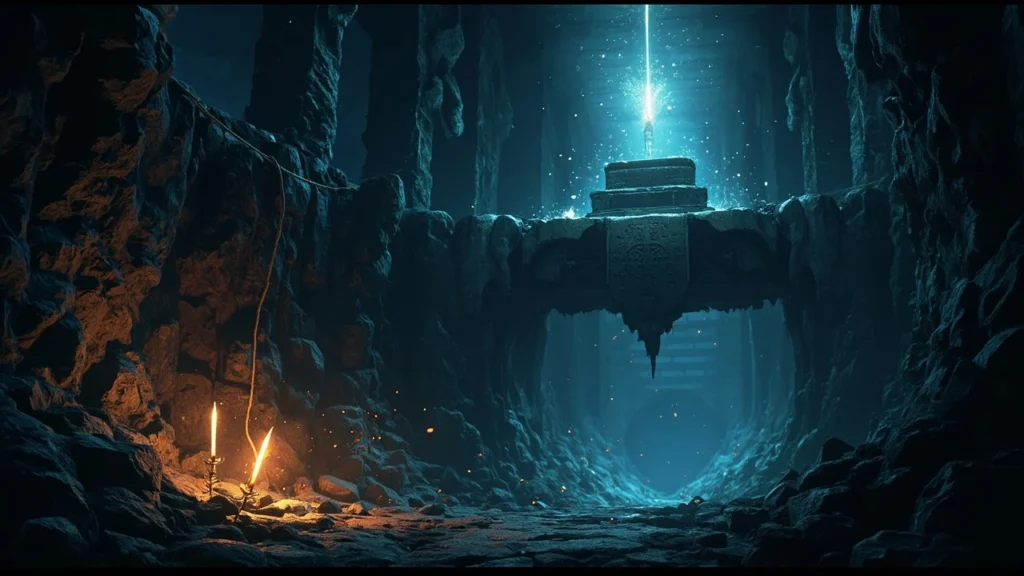
The optional Esoteric Ruins in Clair Obscur: Expedition 33 sit in a small darkened region just west of Old Lumiere, accessed after the main story events in Monoco’s Station. A floating spirit asks the player to retrieve an unknown object from beyond a nearby cliff, then sends the party through a maze that doubles as the quest’s main puzzle space. For a developer or designer reading the encounter as a level design case study, the area combines tight navigation, soft gating, branching dialogue, and a reward that can be tuned independently of the main campaign. The result is a short, self-contained mission that teaches the player how the expedition hub works without breaking the pace of the larger story.
This article reads the quest as a small piece of shipped game design. It is not a substitute for an official developer diary and it does not claim access to internal build data. The goal is to give designers, technical artists, and producers a concrete example of how a contemporary role-playing game structures a handcrafted optional region, so the same patterns can be evaluated, modified, or ported into other projects.
Quest context and why it is treated as optional content
Optional content in role-playing games usually has three jobs. It rewards exploration, it teaches a mechanic the main story will lean on later, and it gives narrative writers a low-pressure canvas. The Esoteric Ruins quest fits all three, which is why it ships as a side quest instead of a story chapter.
First, the area is geographically separated from the main path. Players approach Old Lumiere along a wide road, ignore a ramp that leads to the story portal, and take a small left turn past planted glowing swords before walking up a short secondary ramp. That branching geometry is a classic soft gate: the road stays the most readable option for players who only want the main story, while the secondary ramp advertises itself with a visual landmark rather than a quest marker.
Second, the quest is unlocked by progress, not by level. A player must complete the main story events inside Monoco’s Station before the surrounding overworld opens. This decoupling keeps the side content from competing with early campaign pacing, and it lets a designer tune the Esoteric Ruins encounter for a specific combat and gear bracket without worrying that a player will wander in during the prologue.
Third, the narrative framing is small and self-contained. A spirit in need asks the player to define what a spirit is, offers three dialogue prompts, then asks for an unknown object. There is no long cutscene, no recurring NPC, and no faction. The quest exists, completes, and disappears, which makes it cheap to maintain and easy to test across patches.
Step-by-step path through the Esoteric Ruins region
For developers reading the encounter as a reference, the path is worth breaking into discrete design moves. The published walkthrough for the area describes a route that can be summarized as a sequence of camera and navigation beats.
- From Monoco’s Station, finish the main story events there so the overworld around Old Lumiere is open.
- Travel north toward Old Lumiere along the main path, but ignore the ramp that leads up to the Old Lumiere portal.
- Take a slight left and head northwest past the planted glowing swords, which act as a landmark for the hidden entrance.
- Walk up the secondary ramp that enters the optional Esoteric Ruins region.
- Drop off the small cliff just inside the entrance to reach the floating spirit that triggers the quest.
- After accepting the quest, climb the handholds on the northwestern wall, then use the rope to reach the top of the cliff.
- Cross the upper hillside and enter the maze, where the reward item is located at the end of the puzzle space.
The fact that the quest is gated by a soft turn, a hidden ramp, and a wall climb rather than a quest marker or a fast-travel point is a deliberate design choice. It rewards the player for paying attention to the world instead of to a HUD waypoint, and it keeps the encounter available to players who prefer to read the environment rather than follow arrows.
Dialogue branch and what it teaches about quest writing
Once the player speaks to the spirit, they are presented with three dialogue options that ask the player to define what a spirit is. According to the published guidance for the encounter, the choice does not appear to change the quest outcome, so any of the three answers leads to the same follow-up request to retrieve an unknown item from beyond the cliff.
That decision is a useful example of a designer treating dialogue as worldbuilding rather than as a gating mechanic. The three options give the writer a place to express the setting’s cosmology, but they avoid the trap of locking meaningful content behind a single correct answer. For a project trying to support many playstyles, this is a safe default: the player feels their input matters, but a wrong answer never blocks progress.
For a narrative system, the design implication is significant. The encounter can be implemented with a single dialogue variable that records the spirit definition, a follow-up line table keyed off that variable, and a hard quest flag that only triggers after the second conversation. The reward state is independent of the dialogue state, which means the designer can swap out the dialogue table during early access without touching the reward or the maze logic.
Maze puzzle design patterns worth borrowing
The Esoteric Ruins maze is the structural heart of the side quest. A small, dark, enclosed area with a single intended path, one or more alternate routes, and a final chamber that holds the reward. For a level designer, the encounter is a clean example of a classic “one-room dungeon” pattern applied to a contemporary RPG.
The maze uses three devices that are worth naming explicitly. First, it uses terrain as a signpost. Walls and slopes are tall enough that the player can see the general shape of the room from the entry point, which prevents the maze from feeling unfair. Second, it uses lighting as a guide. The reward chamber is visibly brighter than the surrounding corridors, which creates a pull without requiring a UI marker. Third, it uses enemy placement as a soft timer. A small number of enemies inside the maze keep the player moving and prevent the puzzle from collapsing into a slow search.
| Design device | What the player sees | What the designer controls | Risk if misused |
|---|---|---|---|
| Terrain as signpost | Visible walls, slopes, and landmarks from the entry | Height of geometry, camera distance, fog density | Player feels lost if landmarks are hidden too early |
| Lighting as guide | Brighter chamber at the end of the maze | Point lights, emissive props, sky color, exposure | Player chases a light source that is purely decorative |
| Enemy placement as timer | Small patrols inside the maze | Enemy count, spawn radius, respawn rules | Combat becomes a tax that punishes exploration |
| Hidden entrance as soft gate | Secondary ramp and planted swords near the main road | Path geometry, prop placement, and lighting | Player misses the content entirely and skips a reward |
For technical artists, the maze is also a useful lighting case study. Small enclosed spaces in Unreal or Unity tend to look flat when the same light is used everywhere. The published encounter uses localized warm light for the spirit and the reward chamber, then cools the corridor lighting to push the player toward the brightest area. That is a two-temperature setup that any mid-size project can reproduce with a handful of point lights and a single post-process volume.
Reward design and how the quest gives back to the player
Optional content earns its keep by paying the player fairly. The Esoteric Ruins quest is short, the maze is small, and the dialogue is flavor, so the reward has to carry the rest of the experience. The published guidance frames the reward as a tangible item the spirit desires, and the encounter is tuned so that the player receives something they can use at the current campaign stage rather than at the end of the game.
For a producer, the reward design is the simplest part of the encounter to schedule. Because the reward is a single object, it can be authored once, dropped into a loot table, and tested in isolation from the maze logic. A side quest like this can be balanced in a single tuning pass, which is one reason it ships as a small optional mission rather than a story chapter.
- Reward scope stays small: one item, no new equipment set, no new currency.
- Reward timing matches campaign pacing: useful at the level the player enters the quest.
- Reward is independent of the dialogue branch, which keeps quest logic simple.
- Reward state can be saved on the quest flag, not on the dialogue variable.
This separation matters in a live or patched project. A designer can change the reward later, retune the maze, or rewrite the spirit’s dialogue without invalidating saves that have already passed the trigger. The cleaner the data model, the cheaper the maintenance.
Level geometry and soft gating
Soft gating is one of the most reusable techniques in the encounter. The Esoteric Ruins are visible from the main road, but they are not on the main road. The player sees the entrance as a secondary ramp next to a row of planted swords, and they have to choose to leave the main path in order to enter.
That is a meaningful design choice for several reasons. It keeps the quest from feeling required, it lets the designer place a visual reward (the swords) that signals “there is more here” without a UI marker, and it preserves the player’s sense of agency. A hard gate, such as a locked door, would have made the encounter feel like extra work. A soft gate makes it feel like discovery.
For level designers working in tile-based or modular kits, the encounter is a good reference for how to dress a hidden entrance. A few props, a small lighting change, and a visible but non-critical landmark are usually enough to teach a player that a side path exists. Over-investing in the entrance costs time and rarely improves the experience, because the player is already curious by the time they reach it.
Combat pacing inside a small optional region
Combat pacing is the part of the encounter most often tuned after launch, because a small maze can quickly feel either empty or overstuffed. The published Esoteric Ruins encounter keeps its combat footprint small. A handful of enemies are placed inside the maze, and the spirit encounter is non-combat. That choice respects the player’s time and keeps the focus on the puzzle.
For a combat designer, the lesson is straightforward. A small optional area should not escalate the combat pressure beyond what the main path uses at the same campaign stage. If the player is fighting two enemies in the Old Lumiere approach, the maze should not suddenly require four. If the player is facing elite enemies on the main road, the maze should not drop back to easy fodder. Match the bracket, and the optional content feels like a natural extension of the campaign instead of a separate game.
Quest state, save data, and how to keep the logic simple
From a technical design perspective, the Esoteric Ruins quest is interesting because it has very few states. The player can be in one of three states: the spirit has not been spoken to, the spirit has been spoken to and the maze is active, or the maze is complete and the reward is in the player’s inventory. The dialogue branch is a cosmetic variable layered on top of those three states.
That is a small state machine, and small state machines are easy to test. A QA team can cover the entire quest with a handful of cases, and a programmer can implement it with a single quest flag plus a dialogue variable. There is no timer, no day-night dependency, no faction requirement, and no chained follow-up. The encounter is designed to be forgettable from a maintenance perspective, which is exactly what a small optional region should be.
| Quest state | Trigger | Player-visible result | Data model |
|---|---|---|---|
| Not started | Player has not spoken to the spirit | Maze accessible but empty, spirit floats above the altar | No flag set |
| Active | Player has spoken to the spirit twice | Maze is active, reward item is placed at the end | Quest flag set, dialogue variable recorded |
| Complete | Player has reached the reward chamber | Item is added to the inventory, spirit dialogue changes | Quest flag updated, reward flag set |
For a project that ships across multiple patches, this kind of light state model is the difference between a side quest that survives a year of updates and one that quietly breaks at the worst possible moment. Designers often inherit quests from earlier iterations of a project, and the cleanest ones tend to be the ones with the fewest moving parts.
Art direction, mood, and asset reuse
The art direction of the Esoteric Ruins leans on a familiar palette. Warm light around the spirit, cool shadows in the surrounding corridors, a low-saturation base for the stone, and a small number of emissive props to break up the geometry. None of that is exotic, and that is the point.
For an art lead, the encounter is a useful example of how to dress a small area with a small budget. The team reuses the stone and ruin kits already shipped in the campaign, changes the lighting temperature, and adds a handful of unique props (the planted swords, the spirit, the rope on the cliff wall) to give the area its own identity. The total unique asset count is low, the memory cost is modest, and the area still reads as its own place.
For technical artists, the encounter is also a useful test of dynamic lighting budgets. A small, dark area with several point lights is exactly the kind of space where overdraw and shadow cost can spike. The published lighting setup stays conservative, which keeps the maze playable on lower-end hardware and reduces the cost of porting the encounter to other platforms later.
Audio design choices in a small enclosed space
Audio is easy to under-design in a short optional region, and the Esoteric Ruins encounter is a good reference for how to avoid that. The spirit uses a small set of voiced lines that signal the quest state, the maze relies on ambient music to keep tension without overwhelming the combat, and the reward chamber uses a slightly louder ambience to confirm progress.
For a sound designer, the encounter demonstrates a useful principle: audio should support the navigation, not compete with it. A player inside the maze should hear the direction they came from, the direction they are meant to go, and the distance to the nearest enemy. A small reverb profile change between the corridor and the reward chamber can do most of that work without a heavy original score.
- Spirit voice lines are short and tied directly to quest state changes.
- Corridor ambience is low and continuous to preserve footstep clarity.
- Reward chamber uses a slightly louder ambience to mark progress.
- Combat music is reused from the campaign rather than a custom cue.
The decision to reuse the campaign’s combat music is a practical one. Custom music for a 10-minute optional encounter is hard to justify, especially when the combat bracket matches the main road. Reuse keeps the project on schedule and the player inside the same audio world.
QA and testing strategy for a side quest of this size
A small optional quest is a test designer’s best friend. The QA pass for the Esoteric Ruins encounter can be scoped tightly, the test cases are easy to enumerate, and the risk of regression is low because the encounter does not interact with many other systems.
For a QA lead, the encounter is a good reference for how to budget testing time on a side quest. The critical path covers the entrance, the dialogue, the maze, the reward, and the post-completion state. Each of those is a single test case. The failure modes that matter are: the spirit does not trigger, the reward does not drop, the maze soft-locks the player, and the quest flag does not persist across save and reload. None of those require a long play session to validate.
| Test case | Setup | Expected result | Failure mode to flag |
|---|---|---|---|
| Spirit trigger | Approach the spirit from the cliff | Dialogue opens and quest flag is set | Spirit floats but does not speak |
| Dialogue branch | Pick each of the three definitions | Quest proceeds, dialogue variable is recorded | Branch locks the player out of the maze |
| Maze navigation | Walk every corridor | Reward chamber is reachable from the rope entry | Geometry collision blocks a path |
| Reward drop | Reach the reward chamber | Item is added to the inventory | Reward is invisible or non-interactable |
| Save persistence | Save after the reward, reload | Quest is marked complete and the spirit no longer offers dialogue | Quest resets on reload |
A test pass like this can be written in a few hours and executed in a single day, which is the right scale for a side quest. Larger projects sometimes try to apply the same test density to a 2-hour optional dungeon, and the result is usually a missed deadline or a thin test pass. Scope the test to the content, and the team can ship side content with confidence.
Porting and engine-agnostic lessons
The Esoteric Ruins encounter is built with patterns that are easy to port. The geometry is a small box with a hand-placed navigation mesh, the lighting is a handful of point lights, the quest logic is a tiny state machine, and the audio is reused. None of that is specific to a single engine, which is why the encounter is a useful reference for teams working in Unreal, Unity, or proprietary engines.
For a porting lead, the encounter is a good stress test. If the side quest holds up across a target platform, the engine’s basic navigation, lighting, and quest systems are likely to hold up as well. If the encounter has problems, the team knows exactly which subsystem to investigate. The encounter is small enough to debug in isolation, and it uses enough of the engine’s standard systems to be representative.
For a programmer, the encounter is also a useful study in how to keep the code shallow. The quest can be expressed as a small Blueprint or a tiny state machine in C#. There is no need for a heavy quest framework, no custom editor window, and no designer-facing tooling beyond a flag and a variable. The simpler the implementation, the easier the maintenance, and the easier the port.
Where the encounter fits in a content pipeline
Optional regions of this size usually live in a content pipeline that runs in parallel with the main campaign. The art team reuses the ruin kit, the level designer hand-places the maze and the entrance, the narrative team writes the spirit’s dialogue, the audio team reuses campaign cues, and the QA team writes a focused test pass. That parallel workflow is what makes small optional content affordable.
For a producer, the encounter is a useful example of how to schedule side content. The dependencies are small, the critical path runs through level design, and the QA pass is short. The risk of a delay is low, and the cost of slipping the encounter by a sprint is small. A schedule that can absorb a slipped side quest is a schedule that can absorb a slipped feature.
- Art depends on the shared ruin kit, not on new custom assets.
- Level design depends on the entrance and the maze layout, which are small.
- Narrative depends on three dialogue lines and a follow-up request.
- Audio reuses campaign cues, with optional bespoke ambience for the spirit.
- QA depends on a focused test pass of fewer than ten cases.
That kind of dependency chain is what production leads want to see in a side quest. Every spoke of the wheel is small, and the rim of the wheel (the integration) is short. The encounter is a good example of how to ship optional content without disrupting the main campaign.
Localization and accessibility considerations
A small optional region raises the same localization and accessibility questions as the main campaign, just at a smaller scale. The spirit’s dialogue needs translation, the reward item needs a localized name, and the maze needs to be navigable for players who use different input methods or who need visual assistance.
For a localization lead, the encounter is a good test case because the text volume is tiny. The full string table for the Esoteric Ruins encounter fits in a single page, which means the localization team can handle it inside a normal sprint without a dedicated pass. A side quest that requires its own localization slot is usually a sign that the content is larger than it should be.
For an accessibility designer, the encounter is a useful reference for how to support low-vision players. The lighting is already strong, the reward chamber is brighter than the corridors, and the entrance is signposted by visible props. Adding a contrast option or a high-contrast mode on top of that is straightforward, because the area was already designed with visual hierarchy in mind. A small optional region that respects accessibility from the start is cheaper to certify than a large region that has to be retrofitted later.
What a developer can borrow from the encounter
For developers reading the encounter as a design reference, the most reusable ideas are not the specific props or the specific dialogue. They are the structural choices that keep the encounter cheap to build, cheap to test, and cheap to maintain. The encounter is small, the state machine is small, the asset count is small, and the QA pass is small. Every one of those choices is a deliberate trade-off that the design team made in order to ship the content on time.
For a team planning its own optional content, the encounter is a useful anchor. A small, focused, well-lit, clearly gated side region with a single reward is a better target than a sprawling optional dungeon that competes with the main campaign for attention. The Esoteric Ruins quest is not flashy, but it is finished, and that is the most important quality a side quest can have.
Limitations of this analysis
This article reads the Esoteric Ruins quest as a public design reference, not as a confirmed look at the development team’s actual production data. The mechanics described here are inferred from the published walkthrough and from standard role-playing game conventions. The encounter may be implemented differently in the shipping code, and the team may have internal tools or systems that are not visible from the outside. Treat the patterns here as a starting point for your own design discussion, not as a confirmed description of the shipped implementation.
Developers working on similar content should validate the patterns in their own engine and at their own scale. What works in a 10-minute optional region may not work in a 2-hour optional dungeon, and what works in a turn-based combat system may not work in a real-time action game. The encounter is a useful reference, not a recipe.
Frequently asked questions
What is the Esoteric Ruins quest in Clair Obscur: Expedition 33?
The Esoteric Ruins quest is an optional side quest set in a small darkened region just west of Old Lumiere. A floating spirit asks the player to retrieve an unknown object from beyond a nearby cliff and then sends the party through a maze that holds the reward at its end.
How do you reach the Esoteric Ruins in Expedition 33?
Players first complete the main story events in Monoco’s Station so the overworld around Old Lumiere opens. They then travel north toward Old Lumiere, ignore the ramp that leads to the Old Lumiere portal, take a slight left past the planted glowing swords, and walk up the secondary ramp that leads into the Esoteric Ruins region.
Do the dialogue options in the Esoteric Ruins quest change the outcome?
The published guidance for the encounter indicates that the three dialogue options for defining what a spirit is do not appear to change the quest outcome, so the player can pick the definition they prefer without affecting the reward.
What does the player receive for completing the Esoteric Ruins quest?
Completing the quest rewards the player with the item the spirit requested, which is tuned to be useful at the campaign stage when the encounter is available. The reward is independent of the dialogue branch.
Why is the Esoteric Ruins encounter treated as optional content?
The encounter is optional because it rewards exploration, teaches the player how the expedition hub works, and gives the narrative team a small canvas that does not affect the main story. The area is gated by progress, not by level, so the encounter is available once the surrounding overworld opens.
Is the Esoteric Ruins quest suitable as a level design reference?
Yes. The encounter uses soft gating, terrain as a signpost, lighting as a guide, and a small state machine for the quest logic. Those patterns are common in shipped role-playing games and can be reused in other projects at a similar scale.
How long does the Esoteric Ruins quest take to complete?
Because the area is small, the maze is short, and the dialogue is flavor, the encounter is designed to be completed in roughly 10 minutes of focused play. The exact time depends on the player’s exploration style and on how long they spend in combat inside the maze.
Can the Esoteric Ruins quest be skipped without affecting the main story?
Yes. The encounter is optional and does not gate the main campaign. A player who ignores the secondary ramp near Old Lumiere will not lose access to the story or to the Old Lumiere portal.
What kind of state machine supports an encounter like the Esoteric Ruins?
A small state machine with three states (not started, active, complete) plus a single dialogue variable is enough to support the entire quest. The reward is tied to the active-to-complete transition, and the dialogue variable is recorded for narrative purposes only.
What is the most reusable lesson from the Esoteric Ruins for a small team?
Keep the optional content small in every dimension: small area, small state machine, small asset count, small QA pass. The encounter is finished because every part of it is scoped to fit inside a normal production cycle, and that is the most useful pattern to borrow.