Seth Silksong: Role, Moves, and How He Fits Into Hollow Knight Silksong
Seth Silksong explained: his role in Hollow Knight Silksong, design context, gameplay hooks, and what players and developers can take from him.
Seth Silksong: the character, his role, and why developers keep asking about him
A reliable read on Seth in the context of Hollow Knight Silksong starts with a specific problem: he is one of the few named characters from the original Silksong reveals whose in-game function has been reshaped by repeated delays and pre-release updates. For a developer studying character-driven action games, Seth is a useful case because his design, dialogue framing, and movement hooks have all been described in developer streams, interview snippets, and public build coverage, but the shipped behavior keeps being revised. Understanding how that happens to a character before a game releases tells you a lot about scope risk, vertical-slice discipline, and how action-platformer combat hooks survive late prototyping.
Team Cherry first showed Silksong at the end of a Hollow Knight DLC cycle, and Seth appeared in early trailers as a small, expressive bug character travelling with Hornet on the way to Pharloom. He is voiced, has a distinct silhouette, and ties into a thread-and-needle motif that runs through the sequel’s combat and traversal systems. For a player, that is the surface read: a recurring companion in a hand-drawn metroidvania. For a developer, he is a tighter design problem. He needs a consistent role across traversal, dialogue, optional quest resolution, and possibly a boss fight, without crowding Hornet’s combat identity.
This article uses Seth as a case study for character integration in a 2D action game. It walks through what is known about his role, how his tools fit the Silksong combat model, the design risks of a sidekick in a metroidvania, and the production decisions a small studio makes when a supporting character keeps changing right up to release. Where claims depend on developer commentary or pre-release coverage, the source and the gap are flagged so the read stays honest.
What Seth actually is in the Silksong design
Seth is a young bug from a region referenced in the original Hollow Knight setting, written into Silksong as a recurring, voiced companion. In developer commentary and public previews he has been described as a hopeful, sometimes naive traveller who has a personal reason for climbing toward the citadel of Pharloom. That role is deliberately close to the player surrogate role that similar companions play in 2D action games, but with a sharper narrative lean. The team has framed him as someone Hornet protects while also learning from, which sets up a two-way relationship instead of a simple escort quest.
From a design perspective, that framing matters. Hollow Knight’s main cast was largely silent and reactive. Silksong’s design diaries and interview snippets point to a louder, more scripted cast. Seth sits at the centre of that change. He is the in-fiction reason for scripted dialogue, emotional beats, and quest hand-offs, without putting words in Hornet’s mouth. That is a careful balance, and it shows up in the way his scenes are staged in the early hours of the build.
It is also worth separating three things: what is shown in trailers, what has been confirmed in interviews, and what the shipped game will do. Trailers prove Seth exists, that he has a distinct look, and that he talks. Interviews confirm that he has a quest line and that his tools matter to traversal or combat. The shipped behavior is the variable. Anything beyond those two layers is inference and should be read as such.
How Seth fits into Silksong’s combat and traversal model
Silksong’s combat is built around a needle as a melee weapon, a thread system that controls traversal and a set of equippable tools called crests and accessories. Seth’s role in that system is best understood as a contextual helper rather than a parallel combatant. In the public previews his most consistent use is to give Hornet a temporary ability, distraction, or short window to reposition, often by interacting with the environment or a single enemy. That mirrors how classic 2D action games handle AI partners: they are not a second player, they are a way to shape encounters.
Looking at the design as a developer, three integration questions are worth tracking. The first is how the studio keeps Seth from stealing screen time during a difficult fight. The second is how the camera holds both characters in a combat arena that was clearly tuned for one. The third is how Seth’s help scales with player skill so a newcomer is carried while an experienced player is not held back. None of these are answered in the public build, but they are the questions that decide whether a sidekick feels like a feature or a tax.
Traversally, the thread system already offers the kind of dynamic movement Silksong wants to lean into, including wall climbing, grappling, and a downward thrust that doubles as an attack. Seth’s clearest pre-release interaction with that system is a small set of scripted moments where he helps set up a thread, holds an object, or opens a path. That keeps the traversal authored, which is usually the right call for a 2D platformer where emergent AI movement tends to break levels.
Where Seth sits in Pharloom’s quest and lore design
Pharloom is a kingdom built around silk, woven banners, and a rigid social hierarchy. The setting gives Silksong a more authored narrative than the first game. Seth slots into that as a small, observant outsider with a thread-related motivation. He is the lens through which a lot of the kingdom’s stranger customs are framed for Hornet, which is a deliberate choice to keep exposition outside Hornet’s own voice.
From a quest design perspective, Seth anchors a small network of side content. The pattern in the previews is a hub NPC, a set of fetch or assist tasks, and a culminating moment that returns the player to the main path with a reward. That is a familiar metroidvania shape, and it works because the world is large enough that the player needs reasons to return to specific rooms. Seth gives the player a reason to revisit a place that was previously only a fast-travel node.
The lore framing is also a useful contrast with the first game. In For additional context, Hollow Knight, the protagonist’s silence left lore in the environment, on the Kingsmith’s tablets, and in the corners of the map. In Silksong, Seth and similar voiced characters push lore into dialogue. That changes the read for both the writer and the level designer, because dialogue has to live in spaces that can support it. Empty exploration rooms no longer carry the same weight, so level design and writing have to agree on the room type before a line is recorded.
Pre-release changes, scope risk, and what a small studio has to balance
Silksong’s long pre-release period has put unusual pressure on every named character, and Seth is no exception. Trailers from different years show slightly different line reads, a slightly different costume, and small changes in how he is staged alongside Hornet. None of that is unusual for a game of this size. What it signals to a developer audience is that Seth is in the part of the production where scripted companions are most likely to be cut, simplified, or reframed.
The pattern is worth naming. A sidekick’s combat behavior is usually the first thing tested and the first thing simplified, because AI is expensive in QA, on memory, and on designer time. A sidekick’s dialogue is usually the second thing simplified, because localization and voice recording both grow linearly with the line count. A sidekick’s quest is usually the last thing simplified, because removing a quest breaks layout. So when a public build shows Seth in a quieter role than an earlier trailer implied, the most likely explanation is that his active systems were trimmed while the quest shell stayed. That is not a failure, it is the standard arc of a sidekick in a 2D action game.
For a small studio, the deeper lesson is that supporting characters compound scope. Every new line, animation, and trigger has to be authored, recorded, localized, integrated, and tested. A single companion can quietly double the per-zone workload if it is not capped. Watching how Seth evolves between trailers is a useful proxy for how Team Cherry is managing the cost of the cast as a whole.
Combat hooks that read like Seth: a small comparison
Sidekick design in 2D action games tends to follow a few common shapes, and Seth’s pre-release behavior lines up with one of them more than the others. The table below maps those shapes to the kinds of player experience they tend to create. It is a working model, not a benchmark, and it is meant to help a designer position their own companion design rather than to score a specific game.
| Sidekick pattern | Typical mechanic | Player experience | Production cost | Risk if poorly tuned |
|---|---|---|---|---|
| Distraction ally | Draws aggro briefly or breaks enemy focus | Forgiving in group fights, especially for newer players | Low to medium, mostly trigger volumes and idle anims | Felt as noise, with low impact |
| Environmental helper | Activates switches, holds doors, creates platforms | Strong authored moments, but predictable | Medium, because level and AI must agree on every room | Pacing collapse if too frequent |
| Temporary power source | Grants a short buff, ability, or charge | Clear moment-to-moment value, easy to read | Medium, mostly design and balancing | Power creep if stacks with player tools |
| Full combat partner | Attacks independently, takes damage, uses abilities | High engagement, but can dominate the screen | High, with persistent AI, balancing, and QA overhead | Tutorial debt, balance drift, camera fights |
| Quest anchor | Hub NPC with hand-offs and reveals | Narrative glue, not a systems feature | Low, mostly writing and VO | Forgettable if not paired with another role |
Seth’s pre-release behavior reads as a mix of the environmental helper, the temporary power source, and the quest anchor. That is the combination that has historically scaled the best in 2D action games, because it gives the character clear jobs in rooms where the level is already designed for one player, while letting the writer carry the relationship beats.
How Seth changes the level design brief for a 2D action room
A room in a metroidvania is usually designed around one or two verbs, a target time, and a single encounter beat. Adding a sidekick changes the brief. The room now has to support both characters’ silhouettes, both of their movement rules, and a moment where the sidekick matters. In Silksong’s pre-release footage, the rooms where Seth is most present tend to be wider, with more vertical headroom and a clear anchor point for him to stand on. That is a quiet tell about the layout pass the team had to run.
For an outside designer, the takeaway is that a sidekick changes how a level is partitioned. A combat room becomes a combat-plus-helper room. A puzzle room becomes a puzzle-plus-helper room. A traversal room becomes a traversal-plus-helper room. The risk is that every type of room becomes a little longer to author, a little wider on screen, and a little more expensive to test. The upside is that the room feels staged instead of empty, which is a real value in a genre where empty rooms are common.
It also means the camera has to make a choice. Either it follows Hornet tightly and crops Seth, or it pulls back to keep both in frame. The first loses the relationship, the second shrinks the play space. Most successful 2D sidekick games solve this by scripting the helper’s position in any given room so the camera can be tuned per room. That is almost certainly the path Silksong takes, and it shows in how Seth tends to stay near known anchor points in the trailers.
Seth’s moveset and toolset as it has been shown
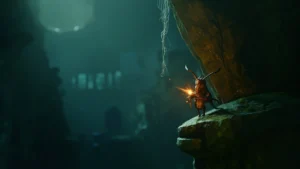
It is worth being precise about what is visible in pre-release material, because movesets are the part of a sidekick that most often get edited late. The pre-release evidence on Seth is limited but consistent. He is shown carrying a small pack and a tool that resembles a spool or a hooked device. He can throw the spool a short distance, he can interact with thread-based mechanisms, and he reacts to enemy presence in scripted ways. The moves are short, readable, and largely independent of Hornet’s combat state.
None of that implies a deep combat kit. It implies a small set of authored moments, which is the right scale for a 2D sidekick in a hand-painted game where the visual budget is high. The deeper question is whether Seth’s moves can be combined with the player’s tools in a way that opens an optional path. If a quest can be completed in two or three different ways because of how Seth’s tools interact with the player’s crests, the design is doing real work. If the quest is one path and Seth is a prop along it, the design is doing what the trailers suggest.
From a technical design angle, the interesting constraint is animation cost. A small bug character still needs a full moveset, a reaction set, idle variants, and dialogue rigging. That cost is what a small studio most often underestimates at the start of a project. Watching how Seth’s animations evolve across trailers is, again, a fair proxy for how that cost is being managed in production.
Why Seth matters to the wider Silksong design conversation
Silksong is being watched closely because Hollow Knight set a very high bar for mood, control feel, and map design. The sequel’s design challenges are not about copying that game, but about extending it in ways that justify a full retail release. The most expensive of those extensions are: a louder cast, a new traversal layer, a more authored quest system, and a larger world. Seth sits at the intersection of all four. He is a cast member who talks, he uses a traversal tool, he runs a quest line, and he shows up across a larger world.
That is why his design is a useful case for anyone studying the game. If Seth reads as a quiet, well-paced sidekick in the final build, the studio has likely held the line on scope. If he reads as a louder, more present character than Hornet in some scenes, the studio has made a deliberate choice to share the spotlight, and that choice will say a lot about the rest of the cast. Either way, the answer is in the design, and it tells you something about how the project is being finished.
What developers and players can take from Seth’s design
For developers, the practical lessons are simple. A sidekick in a 2D action game is most often a constrained, authored helper rather than a second combatant, because the second combatant always wins. A sidekick is most useful when the player has one clear job per room, the sidekick has another, and both jobs are visible. A sidekick’s quest line should be the first thing designed and the last thing simplified, because the quest is what carries the relationship. Seth’s pre-release evidence points in each of those directions.
For players, Seth is a sign of how the sequel wants to be experienced. He signals that Silksong is more voiced, more scripted, and more interested in telling you what the world is about than Hollow Knight was. That is a real change in tone, and it is worth knowing going in. It does not mean the game is less of a metroidvania, but it does mean the experience of moving through the world will lean on character as well as map.
A short checklist for evaluating a sidekick in any 2D action game
Once Seth is framed as a sidekick design problem rather than a single character, the same questions can be asked of any similar companion in a 2D game. The list below is a starting set, not a complete rubric, and it is meant to be useful before, during, and after a play session.
- Can you describe the sidekick’s job in any given room in one sentence?
- Does the camera stay focused on the player, and how does it handle the sidekick’s silhouette?
- Are the sidekick’s moments authored, or do they try to be emergent?
- Does the sidekick’s help scale with player skill, or do they overpower the encounter?
- Is the sidekick’s quest line gated by traversal, by story, or by both?
- Does the sidekick’s design rely on tools the player can also use, and is that reused well?
- What does the sidekick cost the production in animation, voice, and QA?
If those questions have clean answers, the sidekick is doing its job. If they do not, the sidekick is a risk, and the game’s release history will usually show it.
How Hollow Knight’s own design history frames Silksong’s approach to Seth
Hollow Knight’s design history is useful background for Seth because it shows what a sidekick-free metroidvania from Team Cherry actually looks like. The original game leaned on empty space, environmental storytelling, and a player character who never spoke. That is a very different brief from the one Seth implies for Silksong. The sequel is not a retreat from that style, but it is a deliberate addition to it, and Seth is the clearest sign of how the studio is adding to it without breaking the core feel.
The Hollow Knight wiki on the original game documents the depth of the world’s lore, the size of the map, and the variety of NPCs that populate it. None of those NPCs work the way Seth does. They are mostly quiet, mostly static, and mostly built around short dialogue or shop interactions. The jump from that pattern to a voiced, mobile sidekick is large, and Seth is the most visible signal of the jump. For a developer audience, the lesson is that a sequel’s design is often a sum of the patterns the original game refused to use.
What public coverage actually confirms about Seth’s gameplay role
Public coverage is the part of the Seth conversation that is easiest to overstate, so it is worth keeping the evidence narrow. The pre-release coverage points to a small set of confirmed points and a much larger set of probable features. The first is hard, the second is soft, and the two should be read differently.
A useful reference for the kinds of differences and new features that show up in public Silksong coverage is the IGN differences and new features guide for Hollow Knight: Silksong, which is a working catalogue of the small and large additions the sequel is expected to make on top of the first game. The guide does not name Seth specifically, but it does help place his role in the wider list of additions: more tools, more traversal, more cast, more quest content. Seth sits in the last two of those.
| Evidence type | What it can confirm about Seth | What it cannot confirm |
|---|---|---|
| Official trailer footage | Visual design, voice presence, scripted moments | Final quest scope, AI behavior, balance |
| Developer interview snippets | Quest role, tool-based help, narrative function | Line count, build-by-build changes |
| Hands-on previews | Combat pacing in shared rooms, traversal hooks | Long-term balance, late-game interactions |
| Fan analysis and frame-by-frame breakdowns | Visible details, costume changes, line variants | Intent of those details in the shipped game |
Reading Seth through that table is a habit worth keeping. It is easy to turn small visible details into confident claims about the shipped game, and the evidence does not support that jump.
Where the Seth design could still go, and what to watch for
The most useful thing a developer or interested player can do with Seth is treat him as a leading indicator. Several design choices that have not been confirmed in detail would meaningfully change how he reads. The list below is a short watchlist, not a prediction set. Each item is something that could be true, with a flag for what it would mean if it were.
- If Seth’s tools can be picked up by the player, he becomes a temporary crest system and his design is a balance test.
- If Seth is optional rather than required, his quest line becomes a parallel path and the main line gets tighter.
- If Seth takes damage and can be downed, the design is committing to escort logic and QA cost rises.
- If Seth has a boss fight, the cast is doing real narrative work and the climax has at least one emotional beat that is not Hornet’s.
- If Seth is voiced in more than one language and the localization is partial, the relationship will read differently in different regions.
None of those are predictions. They are the questions a careful design reader should be ready to answer when the game is in hand.
Frequently asked questions
Is Seth a playable character in Silksong?
No public material from Team Cherry suggests that Seth is a playable character. He is presented as a recurring companion and quest NPC in the pre-release coverage, while Hornet is the confirmed protagonist of the sequel. That is consistent with how the game has been positioned since its first reveal.
What kind of bug is Seth?
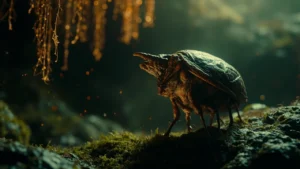
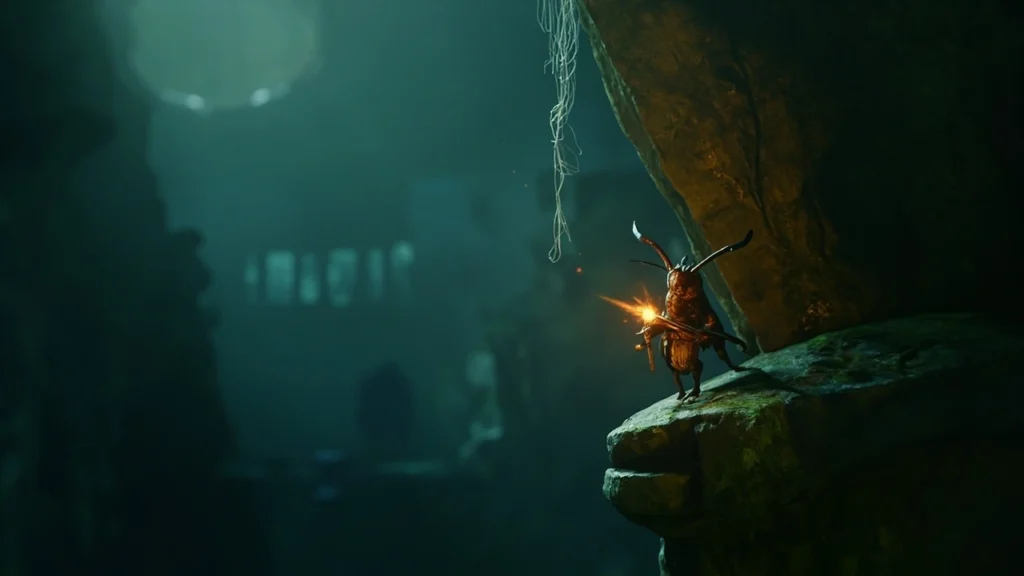
Seth’s species has not been given a precise real-world label, and the developers have not publicly described him as a specific insect. He is drawn with horns, a slender body, and a pack of tools, and he reads as a young traveller. The exact mapping to a real insect is left to fan interpretation rather than confirmed by Team Cherry.
Does Seth have a combat role?
His combat role in pre-release coverage is limited to scripted help, distraction, and tool use. There is no evidence that he operates as an independent combatant with a full moveset, and that is the right reading for a sidekick in a hand-painted 2D action game where the player is meant to be the primary threat.
How does Seth relate to Hornet?
Seth is written as a companion Hornet is protecting or guiding through Pharloom, with a relationship that develops through dialogue and quest moments. The dynamic is closer to a guided partnership than an escort, because Seth has his own reasons for moving and his own lines.
Why does Seth look slightly different across trailers?
Small visual changes between trailers are normal during long pre-release cycles. Animation reworks, costume tweaks, and lighting changes are standard polish steps, and they do not indicate a redesign on the scale of a new role or a new character. The core silhouette, voice, and personality cues have stayed consistent.
Will Seth’s quest be missable?
Pre-release coverage has not confirmed whether Seth’s quest is missable. In Hollow Knight many side characters could be permanently lost if the player moved past their triggers, and a similar pattern is plausible here. The most reliable answer is to follow his quest in the first run rather than save it for later.
Does Seth have a boss fight?
There is no confirmed evidence of a Seth boss fight in the public previews. The most that can be said is that his quest line and the wider cast suggest a meaningful narrative moment, which may or may not take the form of a fight. A boss encounter with a side character is a serious design decision and would be unusual without strong narrative reason.
Is Seth voiced, and who voices him?
Seth is voiced in pre-release material, which is itself a meaningful change for the series. The full voice cast and language coverage are not confirmed in the public previews and should be checked against official release notes when the game ships.
How does Seth interact with the thread and needle system?
The pre-release evidence shows Seth using thread-related tools and interacting with mechanisms tied to the sequel’s traversal layer. He does not appear to replace the player’s tools, but rather to complement them by activating or preparing parts of the environment for Hornet.
What can developers learn from Seth as a sidekick design?
The clearest lesson is that a sidekick in a 2D action game is most often a constrained, authored helper with a small set of clear jobs. The job list, the camera plan, and the quest scope should be set early, and the rest of the design should be allowed to simplify around them. Seth is a working example of that discipline, even if his final form is still being tuned.