Tung Tung Tung Sahur: The Meme, the Horror Game, and Its GameDev DNA
Tung Tung Tung Sahur explained: the Italian Brainrot meme, the first-person horror game it inspired, mechanics, design choices, and what to know before you play.
Tung Tung Tung Sahur: from a viral meme to a sound-driven horror game
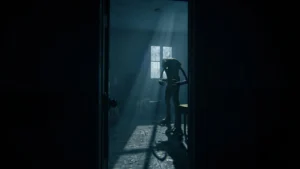
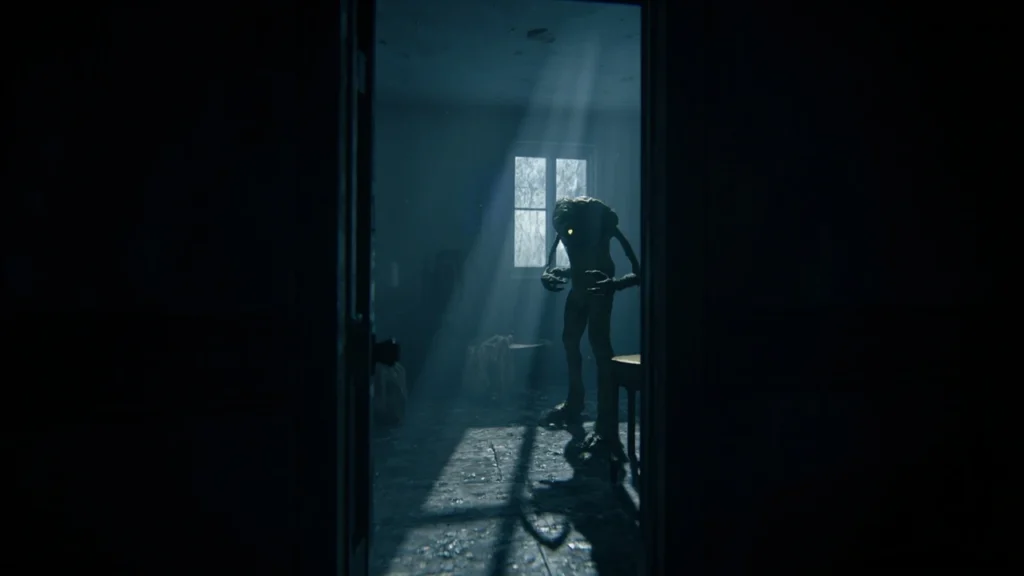
The phrase tung tung tung sahur started life as a loud, absurd joke: a wooden-drummer character used in short Italian Brainrot videos to wake people up before dawn during Ramadan. The rhythm became its own punchline, and the character design was deliberately ugly-cute. That same phrase is now also the title hook of a short first-person survival horror game where the drumming is gone, the limbs are longer than they should be, and your survival depends on staying silent for five nights in a haunted house.
For a GameDev audience, the topic is worth treating carefully because it sits on a fault line between three things that are easy to confuse: a piece of meme culture, a named character design, and a specific small indie release. Each of those exists in a different community, uses different vocabulary, and rewards a different kind of analysis. A useful article about tung tung tung sahur needs to keep them separated while still explaining why the same phrase suddenly appears in horror-game recommendation lists.
The rest of this page walks through what the meme actually is, how the meme character was reshaped into a horror antagonist, what the tung tung tung sahur horror game does with that design, and which design and production choices in that kind of short stealth horror are worth understanding if you are building, porting, or evaluating similar indie titles.
What the tung tung tung sahur meme actually is
The tung tung tung sahur meme is part of the broader Italian Brainrot wave of short, surreal videos that pair absurd AI-generated character art with deliberately jarring sound. The character is usually drawn as a thin figure with a drum, beating out a hard rhythm while text on screen calls for waking up for sahur, the pre-dawn meal eaten before a day of fasting during Ramadan. The humor comes from the contrast: a sacred daily routine is announced by a creature that looks like it should not exist.
Most of the meme’s appeal is audio, not visuals. The three-syllable percussive phrase functions like a chant, which is why it survives being remixed, sped up, slowed down, and overdubbed. A reader who has never seen the meme will still recognize the rhythm if it has been used in a reaction clip, a football chant, or a TikTok edit.
That audio-first design is also what makes the meme convertible into horror. Once you strip away the cheerful community context, the phrase becomes a percussive signal moving through a building, and the percussive signal is exactly what stealth horror games have been built around for years.
How the meme character was redesigned for horror
The transformation from meme to monster is a familiar one in indie horror, and the tung tung tung sahur horror game version follows the same pattern almost step for step. The joke version is short, drum-wielding, and visually messy. The horror version is tall, long-limbed, and built to be glimpsed rather than studied. Two specific design shifts matter most.
- Proportions become threatening. The drum is dropped, the torso is stretched, and the feet are scaled up so that the silhouette reads as wrong at any distance.
- The face loses its expressiveness. The wide, goofy mouth of the meme is replaced with dead, glassy eyes, so the character stops being funny the moment you see it move.
Both changes serve the same purpose: they buy the horror version a serious tone without redesigning the creature from scratch. A player who already knows the meme gets the joke and the scare at the same time, and a player who has never seen the meme still meets a character that reads as uncanny in a dim hallway. That dual-reading effect is the core production trick of the project, and it is what allows a meme with no canonical backstory to support a five-night horror loop.
What the tung tung tung sahur horror game is, in concrete terms
The tung tung tung sahur horror game is a short, first-person survival horror experience. You start trapped inside a dark, locked house, and the goal is to survive five nights and reach the final door. The controls are intentionally standard: W, A, S, D to move, the mouse to look around, and E to interact with objects in the environment. There is no open world, no inventory grind, and no long dialogue tree. The structure is one house, five nights, one creature.
The supporting mechanics layer in three systems that all reinforce the same idea:
- Search and puzzle solving. Each night requires you to find items, read clues, and unlock the final door in stages. The puzzles are not meant to be hard in isolation; they are meant to push you into rooms where the creature can hear you.
- Sound-based stealth. Movement speed, footstep volume, and the noise generated when you interact with objects directly affect whether the creature tracks you. The horror is not in a damage number, it is in whether the creature turns toward the door you are standing behind.
- Night-by-night escalation. Tung Sahur becomes faster, more reactive, and harder to predict as the nights progress, so the same loop that feels survivable on night one becomes genuinely tense by night four or five.
The game also ships with multiple difficulty options. Practice mode lets you explore the house without the monster attacking, which is effectively an exploration and puzzle mode rather than a horror mode, while higher difficulties layer in additional threats beyond the base creature.
Player loop, difficulty, and accessibility at a glance
The table below summarizes the design surface of the tung tung tung sahur horror game as described by its publisher. It is not a review score and it does not measure quality; it only lays out the parts of the experience a player or a developer evaluating the design needs to know.
| Element | What it is in this game | Why it matters for the loop |
|---|---|---|
| View | First-person, mouse-look | Forces players to commit their gaze, which makes sound-based stealth feel more personal. |
| Core verb | Survive the night without being caught | Sets a short, repeatable goal that fits a five-night structure. |
| Failure state | Caught by Tung Sahur, usually through sound | Makes the player responsible for their own risk, not the random number generator. |
| Pacing | Five escalating nights plus a final escape | Keeps the experience short and replayable, in the style of FNAF-style progression. |
| Difficulty modes | Practice (no monster) and harder modes with extra threats | Supports both exploration and full horror, and helps new players learn the layout. |
| Platform | Browser-based play, embedded on the publisher page | Removes install friction and lets curious players try the loop immediately. |
For developers, the takeaway is that every one of these choices tightens the loop. There is no inventory to manage, no save system to learn, and no upgrade tree to optimize. The tension comes purely from the relationship between the player’s noise, the creature’s awareness, and the rooms you have not finished searching yet.
Design choices that make a meme-to-horror port work
Turning a meme into a working horror game is harder than it looks. The tung tung tung sahur horror game makes several specific decisions that are worth naming explicitly, because they tend to repeat in any meme-to-horror project.
Anchor the horror in audio, not in lore
The meme is already an audio pattern, so the horror game can lean on that asset directly. A creature that patrols by sound is easier to build than a creature with a long backstory, and it plays well in short sessions. The tung tung tung sahur horror game keeps the percussive identity of the meme in its creature behavior: you hear it before you see it, and your own movement is the signal it tracks.
Keep the loop under one hour per run
A meme is consumed in seconds. A horror game inspired by a meme has to respect that scale or the joke expires. The five-night structure is deliberately small, so the full run fits inside a single sitting. That is also why practice mode exists: a player who wants to map the house can do so without the pressure of the creature, and a player who wants the full horror can commit to a short, intense session.
Reduce the visual surface, increase the silhouette
The horror version of the character keeps the meme’s log-like limbs and big feet, but removes the drum and simplifies the face. The result is a silhouette that reads at low brightness, in peripheral vision, and through fog. That is a practical rendering choice as much as an art choice: low-detail enemies are cheaper to draw, easier to animate, and feel more threatening precisely because the player cannot see every detail.
Use the house as the second antagonist
The environment in this kind of horror game is not neutral scenery. Doors creak, floors creak, and locked rooms force detours. The tung tung tung sahur horror game uses clutter and locked rooms to push the player into predictable paths, which is what makes the creature’s patrol pattern feel dangerous. The layout is part of the difficulty.
How the game compares with the wider meme-to-horror wave
The tung tung tung sahur horror game is one of several recent indie titles that take a viral character and reframe it as a stealth or survival horror antagonist. Treating them as a single design family is useful, because the trade-offs show up in the same places.
| Design lever | Tung tung tung sahur horror game | Typical meme-horror peers |
|---|---|---|
| Source material | Italian Brainrot meme character | Viral character or short-form video trope |
| Session length | Five nights, short runs | Often under one hour, sometimes a single night |
| Failure condition | Caught by sound-tracking creature | Usually detection or jump-scare, not stat damage |
| Progression | Puzzle unlocks plus night-by-night escalation | Either pure escalation or single escalating encounter |
| Audience overlap | Stealth horror fans and meme-literate players | Horror fans plus community that recognizes the source |
| Distribution | Browser play, low install friction | Mostly browser or itch.io first, Steam later |
The common thread is that meme-to-horror projects succeed when the source meme already has a strong audio or visual hook that can survive being recontextualized. When the meme is only a visual gag, the horror version usually feels arbitrary. When the meme has a sound, a silhouette, or a behavioral pattern, the horror version has something to build on. Tung tung tung sahur qualifies because the phrase is rhythmic, the character has a recognizable silhouette, and the sahur setting implies a clear time pressure: dawn ends the night.
Production and engineering notes for similar projects
For developers working on or evaluating a short stealth horror release in the same family as the tung tung tung sahur horror game, a few practical considerations tend to come up across projects.
- Audio budget is the real budget. Footstep sounds, door creaks, creature vocalizations, and ambient noise carry the entire experience. Skimping on audio mix work is the most common reason a stealth horror prototype feels flat.
- A single enemy is a feature. Multiple creature types feel like extra content, but a single well-tuned antagonist is usually enough for a five-night loop. Each additional type adds animation, audio, AI state, and pathfinding work without adding tension if the base enemy is not already strong.
- Level design has to be the difficulty curve. Without an XP system or a gear ladder, the only way to make night five harder than night one is to change the environment: more locked doors, fewer hiding spots, more patrol routes. The layout has to do the work.
- Browser delivery is a real strategy. Hosting a playable build directly on a publisher page removes the install step that loses most casual players. The browser build for this kind of horror game is often the highest-converting entry point.
- Escalation must be observable, not just numerical. Players need to feel that the creature is faster or smarter each night, not just see a number change. That means animation adjustments, patrol changes, and audio cues that visibly shift across nights.
None of these are unique to tung tung tung sahur. They are the production reality of any short stealth horror release, and they are the part of the topic that matters most to a GameDev reader.
What to know before you play the tung tung tung sahur horror game
For a player who only knows the meme and is curious about the game, a few expectations are worth setting up front so the first session is not wasted on avoidable mistakes.
- The game is short. The full five-night run is designed to fit in a single sitting. If you want a long campaign, this is not it.
- Sound is the mechanic. Walking, running, and interacting all generate noise. If you play with the volume off or muted, the central system is gone and the game becomes a slow puzzle game.
- Practice mode exists for a reason. Use it to learn the layout, the locked doors, and the puzzle locations before you commit to a difficulty where the creature is active.
- Higher difficulty is not just faster. Additional threats beyond Tung Sahur are layered in, so the late nights are not the same encounter repeated faster.
- Browser play is supported. A playable build is embedded on the publisher page, so there is no need to download a launcher or create an account to try it.
These are the same points the publisher surfaces, but they are worth restating in plain language because the gap between the meme expectation and the horror expectation is where most disappointment comes from.
Why the meme and the game will keep being discussed together
The phrase tung tung tung sahur is now three things at once: a piece of Ramadan-related meme culture, a recognizable character design, and a small horror game title. None of those meanings is going to displace the others, and that is the most useful framing for a GameDev audience. The meme gives the game its audience, the character gives the game its silhouette, and the game gives the meme a second life in a community that does not usually overlap with short-form video.
That kind of cross-pollination is rare and it tends to produce durable search behavior, which is why a single phrase keeps surfacing across very different pages. For developers, the practical lesson is that recognizable audio and recognizable silhouettes travel further than lore, and that a small, well-tuned horror release can outlive the meme that inspired it if the loop is honest about what it is.
Frequently asked questions
What does tung tung tung sahur mean?
The phrase is the percussive chant used in the Italian Brainrot meme to wake people up for sahur, the pre-dawn meal eaten before a day of fasting during Ramadan. The meme pairs the rhythm with an absurd AI-generated character beating a drum, and the humor comes from that contrast.
Is tung tung tung sahur a real game or just a meme?
Both. The meme is the cultural origin. The tung tung tung sahur horror game is a separate release, a short first-person survival horror experience where the meme character is reframed as a long-limbed creature hunting you through a haunted house. The two are connected by name and design, not by story.
What kind of game is the tung tung tung sahur horror game?
It is a first-person survival horror game with stealth and light puzzle mechanics. The player is trapped inside a dark house and has to survive five escalating nights, solve puzzles to unlock the final door, and avoid being detected by a creature that tracks sound.
How long is the tung tung tung sahur horror game?
The full experience is built around five nights plus a final escape, so a single run is designed to fit inside a short session. The exact length depends on how quickly you learn the layout and the puzzles, but the game is not structured as a long campaign.
What are the controls in the tung tung tung sahur horror game?
Movement uses W, A, S, D, the mouse handles looking around, and E is used to interact with objects in the environment. Items, doors, and clues are all picked up or activated through the same interaction key.
Does the tung tung tung sahur horror game have difficulty settings?
Yes. The opening menu lets you pick a difficulty. Practice mode lets you explore the house without the monster attacking, which is useful for learning the layout. Higher modes add Tung Sahur and additional threats, and the creature becomes faster and more reactive on later nights.
Can I play the tung tung tung sahur horror game in a browser?
Yes. A browser build is embedded on the publisher page, so the game can be launched directly without downloading a launcher or installing files. That makes it a low-friction way to try the loop before committing to a full run.
Is the tung tung tung sahur horror game suitable for players who do not know the meme?
Yes. The game treats the creature as a stealth horror antagonist, not as a reference. Players who have never seen the meme will still get a tense, sound-aware survival experience, while players who do know the meme get the additional layer of recognizing where the design came from.
Why is the tung tung tung sahur meme being used in horror games?
Because the meme already has a strong audio identity and a recognizable silhouette, both of which are exactly what stealth horror games rely on. The horror version strips away the cheerful context and keeps the rhythm and the proportions, which is enough to make the character feel threatening without rebuilding it from scratch.
Where can I read more about the tung tung tung sahur horror game?
The publisher page for the tung tung tung sahur horror game describes the premise, the controls, the difficulty modes, and the browser build in one place, and it is the most direct source for the design and feature details covered here.